

There are places that tell stories and places that make you feel like you’re a part of them.
A monument that defies the traditional definition of a “museum” stands in the heart of Bhuj, atop the historic Bhujiyo Dungar. The Smriti Van Earthquake Memorial and Museum is more than just an artifact collection; it is a living, breathing testament to the Kutchhi spirit, which refused to break when the earth shook on January 26, 2001.
Smriti Van is no longer just a “recommendation” for anyone planning a trip with Kutch Tour Guide; it is the emotional center of the Gujarat experience. Here’s why this UNESCO-listed marvel should be at the top of your travel itinerary.
1. An Architectural Masterpiece Carved into the Hill
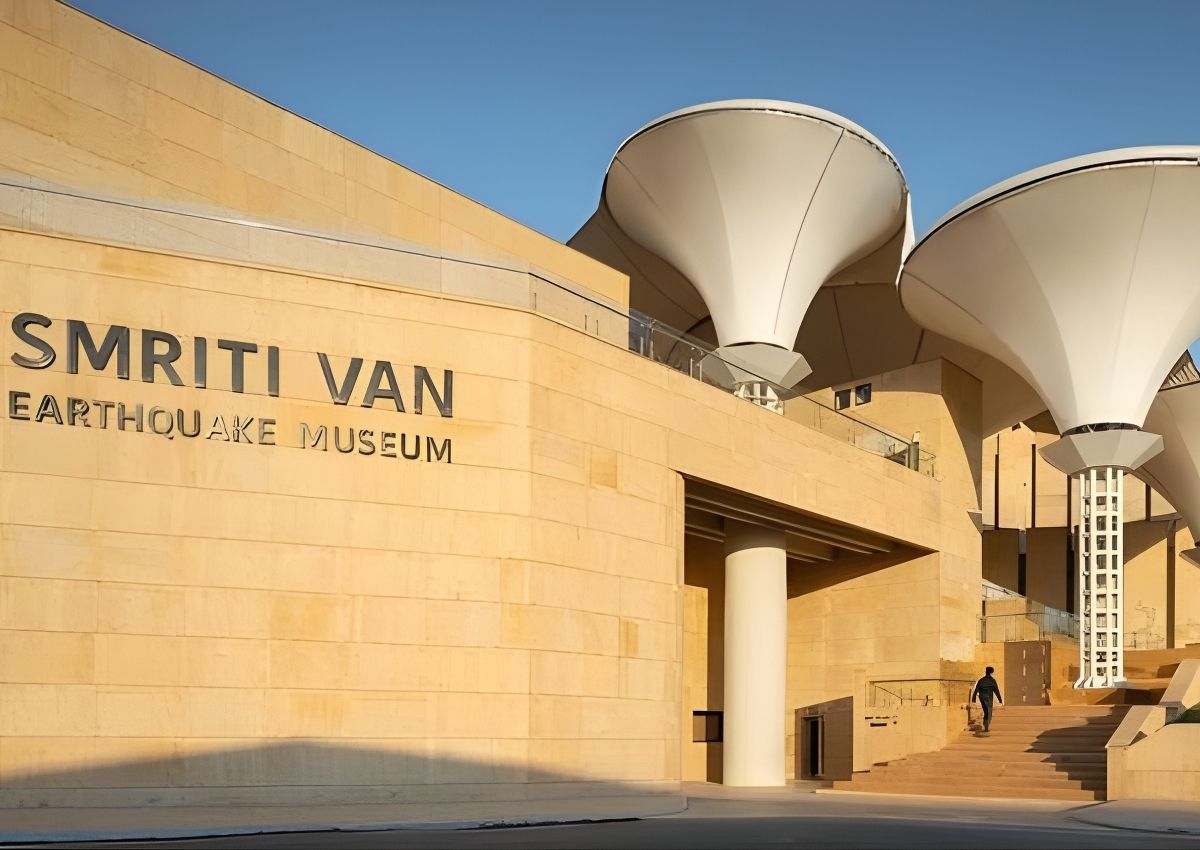 Smriti Van, designed by the legendary Vastu Shilpa Consultants (founded by Pritzker laureate B.V. Doshi), belongs to the hill, not sits on it. The museum is designed as a “spine” that zigzags up the slope, mimicking the natural path of a pilgrimage.
As you walk through its stone-clad corridors, you are ascending, not just moving between rooms. The local Kawada stone used in the construction reflects the sun-drenched palette of the Kutch landscape, giving the building the appearance of a modern relic that has always existed.
2. The Seven Journeys: Rebirth to Renew
The museum is divided into seven philosophical blocks, each a sensory chapter in the story of Kutch: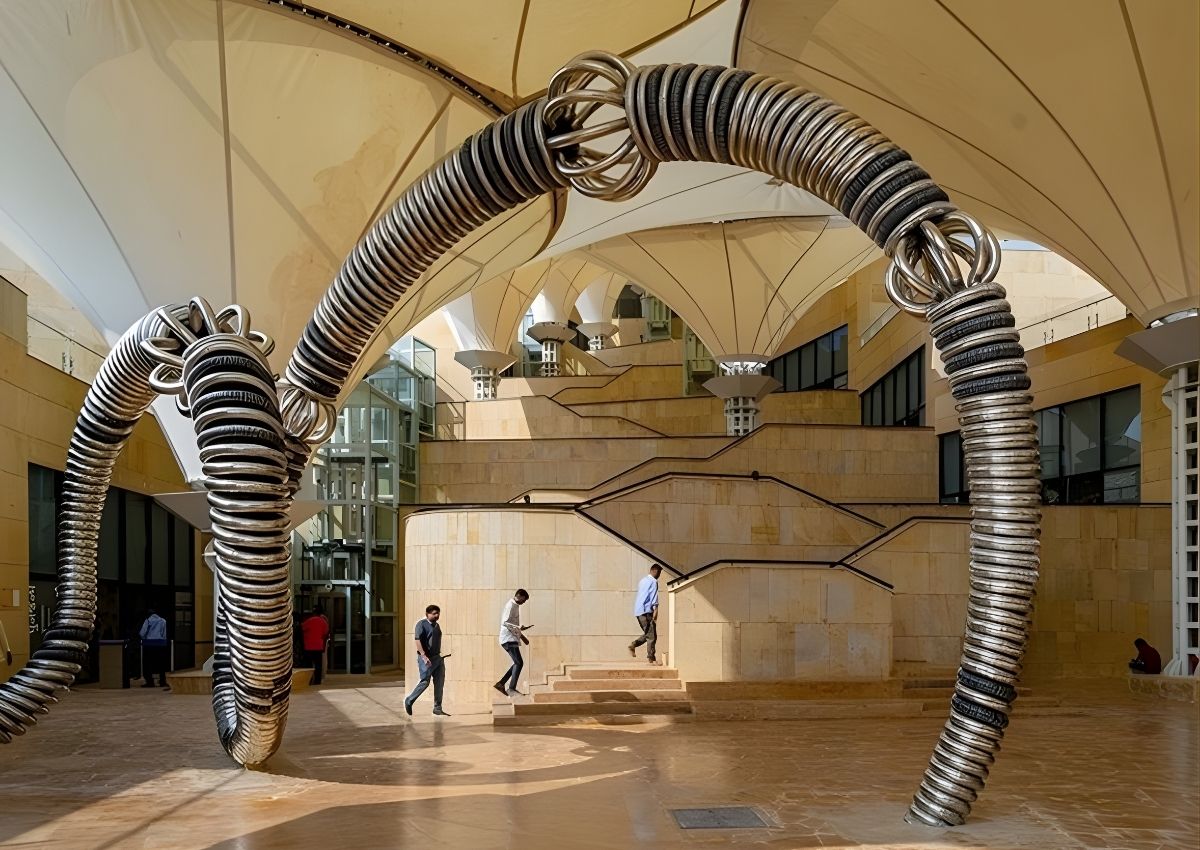
- Rebirth: Through a 360-degree immersive theatre to showcase the ever-changing and transforming landscapes. Visitors also get a glimpse of prosperous ancient human civilizations in the Kutch region, ancient trade routes of Gujarat, and the tale of its advancement and resilience.
- Rediscover: We experience the resilient nature of Kutch, the innovative spirit of Gujarat’s people, and the reasons for the multiple natural occurrences in Gujarat. Through a large-scale part model of Allah Bund with a projection on the floor emphasizing the scale of changes that a natural occurrence can create. Via interactive models and immersive films, see the vulnerabilities, remarkable adaptations, and resilient responses of the people of a region with erratic environment.
- Restore: People from all walks of life were affected by the earthquake, here we recount the tragic events of the 2001 Bhuj earthquake. An actual-size sectional bus with film projection to acquaint the visitors with the immediate measures taken by the government of Gujarat. Hologram theatre showcasing all the help that came in from all over the world and the undying efforts of rescue teams to save life.
- Rebuild: This block gives us a comprehensive understanding of the collective process of rebuilding, reconstructing, and reviving Gujarat for long-term disaster mitigation. A table projection multimedia show recreating and narrating the scenario that led to the formation of GSDMA and the immediate actions undertaken It also presents the immediate rescue and relief activities that followed and showcases the collective effort channelized towards rebuilding Gujarat in the aftermath of the 2001 earthquake.
- Rethink: The Rethink Block imparts us with the knowledge of global disaster response and preparedness measures through games and interactive activities. The emotional and psychosocial ramifications of post-disaster management are documented here through interviews and first-person experiences.
- Relive: Experience the tremors that people felt in the 2001 Earthquake in a realistic manner. This block also houses the tree of Smritivan, present inside an infinity room, where you can add paper-made petals to the branches as messages. The tree is enclosed in an infinite space formed with specialized mirrors and automated lighting, forming a forest using a single element.
- Renew: Visitors can light up a digital flame through touch panels, which will travel through digital LED walls up to the ceiling and form one united light. It is the highest number of optical fiber sensor-based lighting that has ever been placed in a single location in India. Light which will be projected as a beam of light in the outdoor of the museum and be visible across Bhuj as a homage. A breathtaking sight to behold!
3. A Living Forest: One Tree for Every Soul
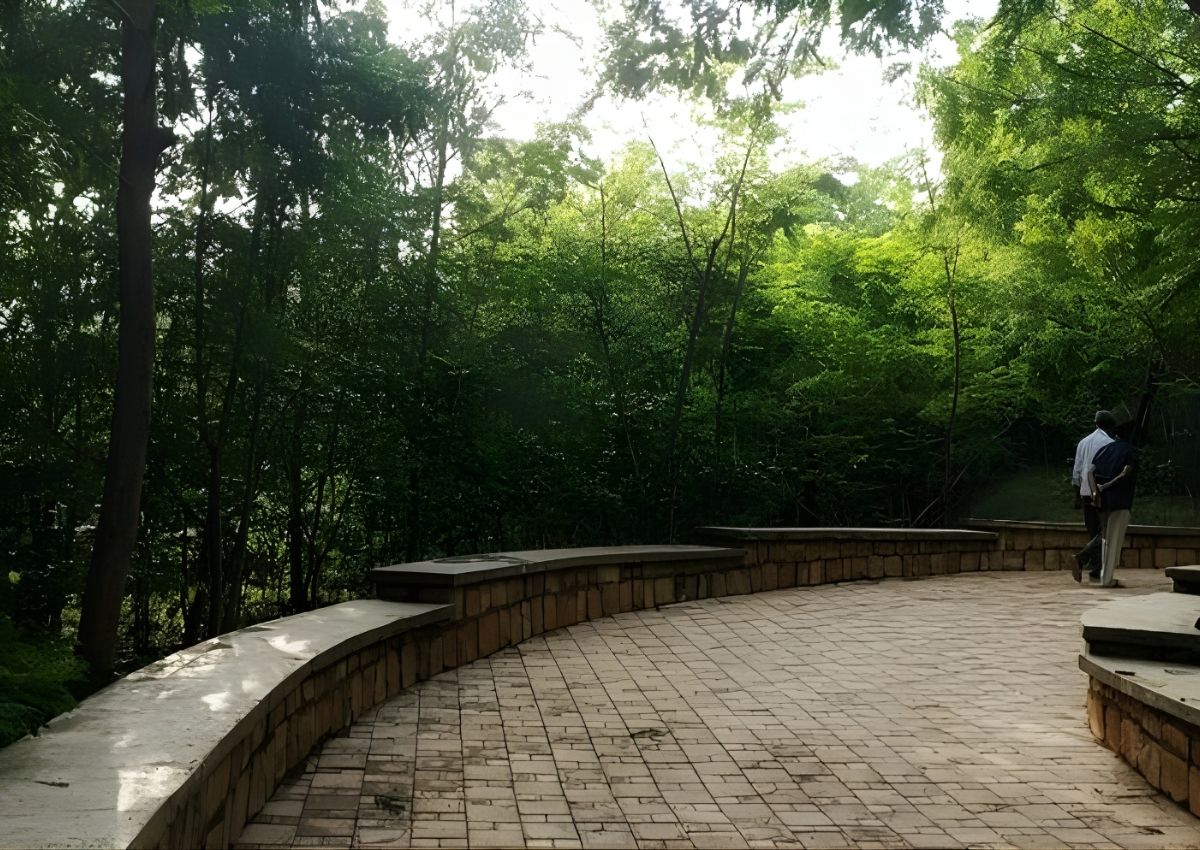 Smriti Van translates to “Forest of Memories.” The memorial is home to the world’s largest Miyawaki forest, featuring over 4.5 lakh trees. But these aren’t just trees; they each represent a life lost in the earthquake.
The landscape is dotted with 50 check dams, each with the names of the victims. These dams serve a dual purpose: they serve as a pilgrimage site for families while also restoring groundwater, bringing life back to the earth that once took it away.
4. The Sun Point: A View Like No Other
As your tour nears its sunset, we recommend heading to the Sun Point. This elevated platform features a year-round calendar and offers a panoramic view of Bhuj city. As the sun dips below the horizon, the city lights begin to twinkle, and you realize that the ruins of 2001 have been replaced by a vibrant, glowing metropolis.
5. The Future Revealed: Smritivan Phase 2
The story of Smriti Van is far from over. In a landmark announcement coinciding with the 25th anniversary of the earthquake in 2026, the Honorable Chief Minister of Gujarat, Shri Bhupendrabhai Patel, has unveiled Smritivan Phase 2.
While Phase 1 focused on remembrance and history, Phase 2 is designed to be a “living space” for the future. This expansion will further develop the 170-acre site atop Bhujiyo Dungar into a global hub for:
- Capacity Building: Training programs for disaster management and resilience.
- Sustainability: Enhancing the site’s eco-friendly footprint with expanded renewable energy and water conservation models.
- Holistic Learning: New institutional spaces where students and professionals can study the science of “Kachchhiyat”—the unique strength and adaptation of this region.
This next chapter ensures that Smriti Van isn’t just a place to look back, but a beacon that helps the world look forward.
Plan Your Visit with Kutch Tour Guide
At Kutch Tour Guide, we believe in travel that touches the heart. Smriti Van is a place of healing, education, and immense pride.
- Best Time to Visit: October to March (during the Rann Utsav season).
- Museum Timings: 10:00 AM to 6:00 PM (Closed on Mondays).
- Memorial Park: 5:00 AM to 11:00 PM.
- Pro Tip: Spend at least 3-4 hours here. The museum is massive, and you’ll want time to absorb the simulator experience and the hilltop views.
Ready to witness the resilience of Kutch? Book your curated Bhuj tour today with Kutch Tour Guide and let us take you on a journey from the white sands of the Rann to the green heights of Smriti Van.
Kutch Nahi Dekha, Toh Kuch Nahi Dekha!


 Our Affiliate Websites :